


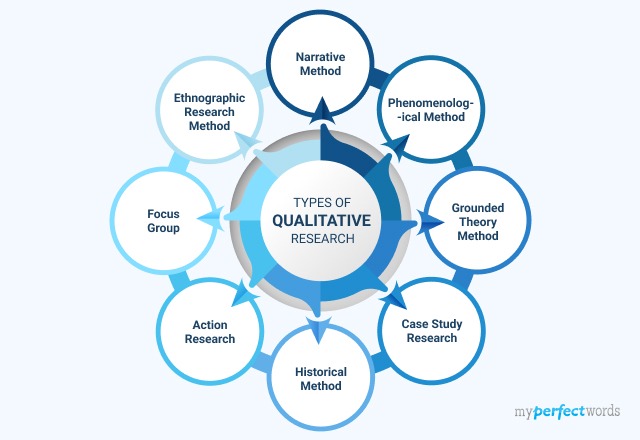
The 8 Types of Qualitative Research
Qualitative research focuses on understanding why and how rather than counting or measuring. It deals with words, themes, and meanings instead of numbers and statistics. For a deeper look at qualitative research as a methodology approach, see our qualitative research method guide.
Here is a detailed explanation of the 8 types of qualitative research:
Ethnographic Research
Ethnographic research involves studying a group of people in their natural environment over an extended period. The researcher immerses themselves in the setting to observe behaviors, routines, and social dynamics firsthand.
Purpose | Method | Outcomes |
Understand a culture or community | Fieldwork, observation, interviews | Rich, contextual data about real-world behavior |
When to use it: When you want to understand how a specific group of people live, work, or interact within their environment. It's commonly used in anthropology, sociology, and organizational studies.
Example: A researcher spends six months working alongside nurses in a hospital to understand the informal communication practices that aren't captured in any policy document.
Narrative Research
Narrative research collects and analyzes personal stories to understand how individuals make sense of their experiences. The focus is on the story itself, its structure, meaning, and context.
Purpose | Method | Outcomes |
Understand individual lived experience through storytelling | In-depth interviews, personal documents, journals | Detailed personal accounts that reveal meaning and identity |
When to use it: When you want to explore how a person or group constructs meaning around a specific experience, particularly useful in education, psychology, and social work.
Example: A researcher interviews first-generation college students about their academic journeys to understand the personal challenges and turning points they experienced.
Phenomenological Research
Phenomenological research explores the lived experience of people who share a common event or phenomenon. The goal is to understand the essence of that experience, what it truly feels like from the inside.
Purpose | Method | Outcomes |
Capture the shared essence of an experience | In-depth interviews, reflective journaling | A descriptive account of the core meaning of the experience |
When to use it: When you want to understand what an experience is actually like for the people who go through it. It's popular in nursing, counseling, and education research.
Example: A researcher interviews cancer survivors about their experience of receiving a diagnosis to understand the common emotional and psychological responses.
Grounded Theory
Grounded theory is used to develop a new theory directly from collected data rather than testing an existing one. The researcher gathers data, identifies patterns, and builds a theoretical framework from the ground up.
Purpose | Method | Outcomes |
Generate a new theory from raw data | Iterative interviews, constant comparison analysis | A substantive theory grounded in participant data |
When to use it: When there's little existing theory on your topic and you want to build one. It's especially useful in sociology and health sciences where new phenomena need explaining.
Example: A researcher interviews remote workers at multiple companies to develop a theory about how distributed teams build trust without face-to-face interaction.
Case Study Research
Case study research involves an in-depth investigation of a single case, a person, organization, event, or situation, to gain a detailed understanding. It draws on multiple sources of data to build a complete picture.
Purpose | Method | Outcomes |
Deeply understand a specific instance | Interviews, documents, observations, archives | A comprehensive, multi-perspective account of one case |
When to use it: When you want to explore a specific, real-world situation in detail. It's common in business, law, medicine, and political science.
Example: A researcher examines how one school district successfully implemented a bilingual education program to identify the factors that led to its success.
Need Help Choosing the Right Method?
Our writers are experts in all types of qualitative research methodology.
Matched to a writer with your subject background.
Historical Research
Historical research uses existing records, documents, and artifacts to understand past events or social phenomena. The researcher interprets historical sources to draw conclusions about the past.
Purpose | Method | Outcomes |
Understand past events and their significance | Analysis of primary and secondary sources | A contextual interpretation of historical facts and trends |
When to use it: When you want to understand how something developed over time or why a historical event unfolded the way it did. It's used in history, education, and social sciences.
Example: A researcher analyzes government policy documents and newspaper archives from the 1950s to understand how public health campaigns shaped attitudes toward smoking.
Action Research
Action research is a participatory approach where researchers and practitioners work together to identify a problem and implement a solution, then evaluate the results. It's cyclical, you research, act, reflect, and repeat.
Purpose | Method | Outcomes |
Solve a practical problem in a real-world setting | Collaborative observation, reflection, intervention | Practical improvements and context-specific insights |
When to use it: When you're working within a real organization or community and want to improve a specific practice. It's especially popular in education and healthcare.
Example: A teacher and a researcher collaborate to identify why students disengage during math lessons, try a new instructional approach, observe the results, and refine the method across several cycles.
Focus Groups
Focus group research involves guided discussions with a small group of participants to explore their attitudes, opinions, or experiences on a topic. The group dynamic often produces insights that one-on-one interviews wouldn't.
Purpose | Method | Outcomes |
Gather collective perspectives and explore group dynamics | Moderated group discussion | Rich conversational data, shared opinions, emerging themes |
When to use it: When you want to understand how people discuss and react to a topic together, not just individually. It's widely used in marketing, public health, and social policy research.
Example: A public health team conducts focus groups with teenagers to understand their attitudes toward mental health services before designing a new outreach campaign.
How to Choose the Right Type of Qualitative Research
The right type depends on your research question, not your personal preference. Ask yourself: What am I actually trying to understand?
If you want to understand a culture from the inside, that's ethnography. If you want to capture individual stories, narrative or phenomenological research fits best. If there's no existing theory and you need to build one, grounded theory is your approach. And if you're working within an organization to fix a real problem, action research is the most practical choice.
It also helps to think about your access to participants and data. Historical research works when you can't speak to living subjects. A case study is ideal when one specific situation offers unusually rich material. Focus groups work well when group interaction itself is part of what you want to study.
For help with structuring your methodology section once you've chosen your type, see our guide on writing your research paper methodology section. And if you're still deciding whether qualitative research is the right fit for your study at all, check out how qualitative vs quantitative research. You may also find it useful to look at research design framework options, since your research design and your choice of qualitative type are related but separate decisions.
Types of Data Analysis in Qualitative Research
Once you've collected your data, you need a way to make sense of it.
Thematic Analysis:
The most common approach is thematic analysis, where you read through your data and identify recurring themes or patterns. It works across almost every qualitative type.
Content Analysis:
Content analysis is more systematic; you categorize words or phrases to identify patterns at scale.
Discourse analysis:
Discourse analysis goes deeper, looking at how language itself shapes meaning.
Narrative analysis:
Narrative analysis focuses on the structure and content of stories.
Comparative Analysis:
Grounded theory uses constant comparative analysis to build a theory as data is collected.
The method you choose should match your research design. Case studies often combine multiple methods. Focus groups work well with thematic or framework analysis.
Conclusion
In conclusion, qualitative research methods play an important role in helping researchers understand people’s behaviors, experiences, and motivations. These approaches allow researchers to explore complex social issues, generate new insights, and develop stronger research questions.
However, writing a well-structured research paper can be challenging, especially when you are dealing with complex research methods or tight deadlines. If you ever feel stuck at any stage of the process, getting professional assistance can make a big difference.
Our experienced writers are ready to help you with every step of your research paper, from selecting the right methodology to delivering a well-written, properly formatted paper.
Let a Professional Handle Your Research Paper
We write, format, and cite, so you don't have to stress.
- Expert writers with subject-specific knowledge
- Every paper includes a Turnitin AI + plagiarism report
- Free revisions until you're satisfied
- Available 24/7
Rush orders welcome, Countless students helped.
Get Research Paper Help
-20615.png)

-20655.png)
-20737.png)
-9374.jpg)


-20592.png)
 (1))
-20591.png)

-20668.png)
-20612.png)
-20657.png)


-20577.png)
-20575.png)


-20578.png)



 (2))
)
 (1))
 (1))
 (1))
 (1))
 (1))
 (1))
-20419.png)
-20426.png)
-20431.png)
-20738.png)
-20739.png)
-20745.png)
-20755.png)