


-20615.png)
What is a Research Paper?
A research paper is an academic document where you investigate a topic, gather evidence from credible sources, and present your own argument or analysis. It's not just a summary of what others have said. It's your chance to add something to the conversation.
That's what makes it different from a regular essay. Essays are typically shorter and more opinion-driven. Research papers demand original analysis, proper citation formatting, and a structured argument backed by evidence.
| If you want to understand the full difference, our breakdown of research paper vs essay covers it in detail. |
Most professors assign research papers to test whether you can think critically, use sources responsibly, and communicate complex ideas clearly. It's a lot to manage, but once you know the process, it's very doable.
The types of research papers vary, too.
- Analytical papers, examine and evaluate evidence.
- Argumentative papers, take a position and defend it.
- Empirical papers, report original research findings.
Most undergraduate assignments fall into the analytical or argumentative category.
|
| Knowing which type you're writing before you start shapes how you frame your thesis and structure your body sections. |
Understanding the Typical Length of a Research Paper
The length depends on your assignment and academic level. Undergraduate papers typically run 10 to 15 pages, while graduate work goes much longer.
| For a full breakdown by level and format, including page counts by citation style and course type, check our guide on how long a research paper should be. |
How to Write a Research Paper Step by Step
Here's the full process, from receiving your assignment to submitting your final draft. Each step builds on the one before it, so resist the temptation to jump ahead. Students who skip straight to writing without researching or outlining first almost always end up rewriting large chunks of their paper.
Step 1: Understand the Assignment
Before you do anything else, read your assignment sheet carefully. Note the required word count, the citation format your professor wants (APA, MLA, Chicago), and the deadline. Missing a format requirement on a paper you spent weeks on is a painful way to lose marks.
Pay special attention to the prompt itself. "Analyze" means something different from "describe" or "argue." If the prompt asks you to take a position, you need a clear thesis. If it asks you to evaluate, you need criteria for your evaluation.
| If anything is unclear, ask your professor. They'd much rather answer a question upfront than grade a paper that missed the point entirely. Getting clarity now saves you from a complete rewrite later. |
Step 2: Choose a Research Paper Topic
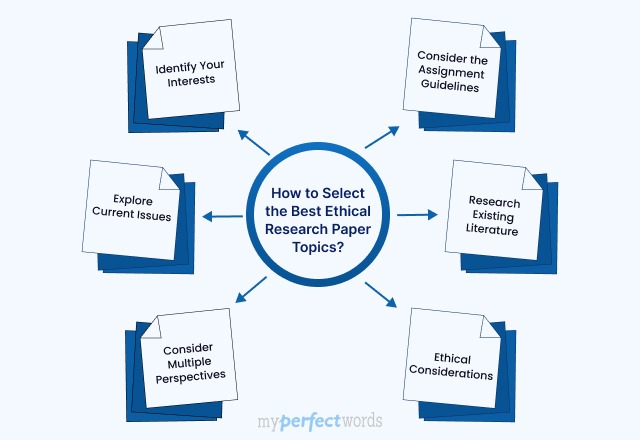
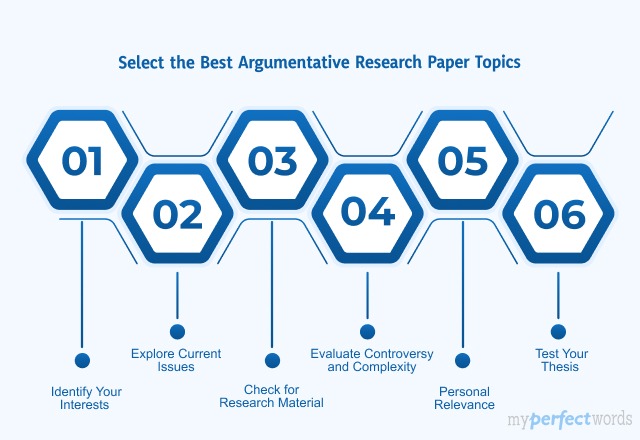
Picking the right topic is half the battle. Too broad, and you'll drown in sources. Too narrow, and you won't find enough material to work with. The sweet spot is a topic that's focused enough to argue clearly but wide enough to have real research behind it.
Start by brainstorming areas within your subject that genuinely interest you. You're going to spend a lot of time with this topic, so picking something you're curious about makes the whole process easier. Then narrow it down by asking: "What specific question can I answer about this?"
Here's a simple test: can you write a one-sentence argument about your topic? If you can, you probably have a workable topic. If you can only write a description ("This paper is about climate change"), you need to narrow it down. "This paper argues that carbon taxation is more effective than cap-and-trade systems for reducing industrial emissions" is a topic you can actually write a paper about. Use your thesis as a filter from this point forward; every source you include should connect back to that central argument. |
Also consider the available research. If you pick a topic that's too new or too niche, you might struggle to find enough credible sources. Do a quick preliminary search before committing.
| For help choosing and narrowing a topic, see our full guide on research paper topics. |
Step 3: Conduct Your Research
Now you need sources. Not just any sources, though. Credible ones. That means peer-reviewed journal articles, academic books, government reports, and reputable news organizations. Wikipedia can point you in the right direction, but it's not a citable source.
Use your university library's database access (JSTOR, Google Scholar, PubMed, etc.) to find quality material. As you read, take notes and track your sources carefully. You'll need full citation details later. Keep asking yourself: "Does this source actually support my argument, or am I just including it to hit a number?"
Aim for depth over volume. Five sources you've actually read and understood are worth more than fifteen you've only skimmed. Strong research papers cite their sources precisely and engage with them critically, not just quote them and move on.
| For a full walkthrough of finding and evaluating sources, see our guide on how to find sources for a research paper. |
Step 4: Write a Research Question and Thesis
Your research question is the specific question your paper sets out to answer. Your thesis is your answer to that question, and the central argument your entire paper will support.
These are two different things, and they work together. For example:
Research question: What effect did social media have on political participation among young voters in the 2020 U.S. election? Thesis: Social media platforms significantly increased political engagement among voters aged 18 to 24 during the 2020 U.S. election, primarily through peer-driven content sharing. |
A strong thesis is arguable, specific, and supportable with evidence. "Climate change is bad" isn't a thesis. "Coastal zoning policies in Florida have failed to account for projected sea-level rise, creating long-term economic liability for state taxpayers" is a thesis.
Your thesis will likely evolve as you research and write. That's normal. Write a working thesis early to guide your research, then refine it once you've done more reading. Getting these right before you write saves you enormous time. If your thesis is vague, your paper will wander.
| For detailed guidance on crafting an effective thesis, check our guide on the research paper thesis statement. |
Step 5: Create a Research Paper Outline
Don't skip this step. An outline is what separates a paper that flows logically from one that reads like a jumble of ideas. Map out your sections, what argument each one makes, and what sources support it.
Think of your outline as a test run for your thesis. If you can't map out a clear structure that supports your central argument, your thesis might need reworking before you write a single body paragraph. That's much easier to fix at the outline stage than after you've written 3,000 words.
| A good outline doesn't take long to write, but it makes the actual drafting process significantly faster. See our guide on research paper outline for a ready-to-use structure. |
Step 6: Write the Research Paper Draft
Your first draft's only job is to exist. Don't aim for perfection. Aim for completion. Get your argument down, section by section, following your outline.
Some students find it easier to write their introduction last, once they know exactly what argument their paper actually makes. That's a legitimate strategy. If you're stuck on your intro, skip it, write the body, then come back.
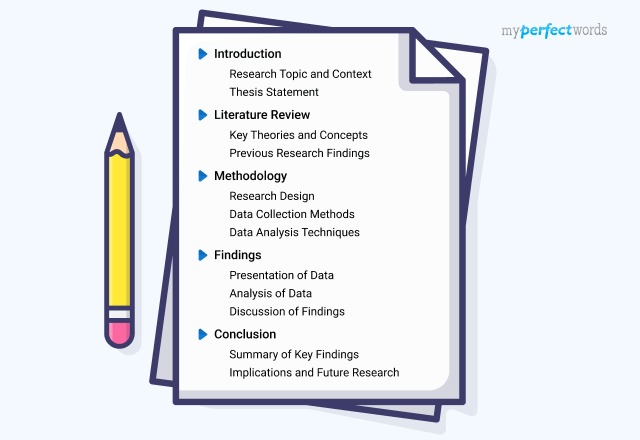
Your paper will typically include:
Write each section knowing you'll revise it. Treating the first draft as the final version is one of the most common mistakes students make. |
Keep the writing momentum going by leaving notes to yourself rather than stopping to research mid-draft. Something like finding a source for this claim keeps you moving without breaking your flow. You can fill those gaps in the second draft.
Step 7: Cite Your Sources
Once your first draft exists, citations move to the front of the queue. Every claim that isn't your own original thought needs a citation. Not citing your sources, even accidentally, is plagiarism, and the consequences are serious.
The three most common citation formats are APA, MLA, and Chicago. Each has specific rules for how to format in-text citations and your reference list.
|
Citation management tools like Zotero or Mendeley can save you a lot of time by organizing your sources and generating formatted citations automatically. If you use one, still double-check the output. Automated citation tools get it wrong more often than you'd expect.
| For a full guide to each format, see how to cite a research paper. |
Need a Perfectly Formatted Research Paper?
Our expert writers handle structure, citations, and formatting for you.
No stress. Just a perfectly formatted paper, on time.
Step 8: Write the Second Draft
Once your first draft is done, step away from it for at least a few hours. Then come back and read it like a reader, not a writer. Is your argument clear? Do your sections flow from one to the next? Does each paragraph actually support your thesis?
This is where you deepen your analysis, add evidence you missed the first time, and cut sections that aren't pulling their weight. Be ruthless here. If a paragraph doesn't directly support your argument, it doesn't belong in the paper, no matter how much work went into it.
Check your transitions too. The connection between paragraphs should feel logical, not forced. A reader who has to re-read a sentence to understand why it follows the previous one is a sign that your argument needs cleaner links between ideas.
| The second draft is where good papers become great ones. |
Step 9: Edit and Proofread Your Research Paper
Editing and proofreading are two separate tasks. Editing is structural: checking that your argument holds together, your transitions work, and your evidence is strong. Proofreading is surface-level, catching grammar errors, typos, and formatting inconsistencies.
Do them in that order. Don't proofread a section you might delete. It wastes time and creates a false sense of completion.
When editing, ask yourself:
These are structural questions, and they need to be answered before you worry about commas. |
For proofreading, consider reading your paper out loud or using text-to-speech software. You'll catch awkward phrasing you'd skim past when reading silently. Also, read from the last sentence to the first, one sentence at a time. It sounds odd, but it forces you to evaluate each sentence on its own rather than reading for flow.
| For a systematic editing checklist, see our guide on editing your research paper. |
Research Paper Format
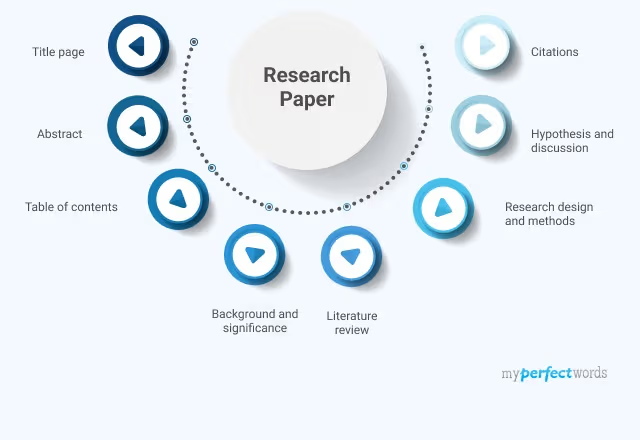
Getting your format right matters. Many professors dock marks for formatting errors even on otherwise strong papers. Here's an overview of the standard sections and what each contains:
Section | What It Contains |
Title Page | Paper title, your name, institution, date |
Abstract | 150 to 250 word summary of the whole paper |
Introduction | Background, thesis, roadmap |
Literature Review | Summary and analysis of existing research |
Methodology | How you conducted the research |
Results | What you found |
Discussion | What the findings mean |
Conclusion | Summary and implications |
References | All sources cited in the paper |
Appendix (optional) | Raw data, supplementary material |
The exact format requirements, especially for title pages, headings, and references, vary by citation style. The "research paper format" your professor specifies (APA, MLA, Chicago) dictates almost everything about how your paper looks.
| These aren't small details. Getting the format wrong signals to your professor that you didn't follow instructions, even if your content is strong. |
Conclusion
This guide has walked you through the key steps needed to write a strong and well-structured research paper. From choosing a topic to organizing your ideas and citing sources, each step plays an important role in producing high-quality academic work.
However, writing a research paper can still be challenging, especially for students who struggle with research, structure, or academic writing.
Before you submit, it helps to run through a structured checklist covering everything from your thesis to your citations.
| We've put together a complete research paper checklist you can use at every stage of writing, from planning through final proofreading. |
Get expert help from our writers at MyPerfectWords.
Still Feel Stuck? We've Got You.
High-quality research papers at affordable student-friendly rates.
- Expert writers matched to your subject
- Enjoy original and properly cited work
- Free revisions until you're satisfied
- Turnitin report with every order
Let our experts handle your research paper from start to finish.
Place Order Now

-20655.png)
-20737.png)
-9374.jpg)


-20592.png)
 (1))
-20591.png)

-20668.png)
-20612.png)
-20657.png)


-20577.png)
-20575.png)


-20578.png)



 (2))
)
 (1))
 (1))
 (1))
 (1))
 (1))
 (1))
-20419.png)
-20426.png)
-20431.png)
-20738.png)
-20739.png)
-20745.png)
-20755.png)