


Case studies are a type of research methodology. Case study research designs examine subjects, projects, or organizations to provide an analysis based on the evidence.
It allows you to get insight into what causes any subject’s decisions and actions. This makes case studies a great way for students to develop their research skills.
What are the Types of Case Study?
Multiple case studies are used for different purposes. The main purpose of case studies is to analyze problems within the boundaries of a specific organization, environment, or situation.
Many aspects of a case study such as data collection and analysis, qualitative research questions, etc. are dependent on the researcher and what the study is looking to address.
Here are different types of case study analysis methods:
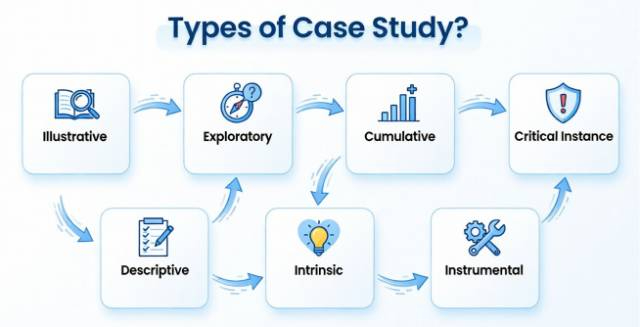
Once you've identified your case study type, you'll need to follow proper case study format guidelines to present your research professionally.
Let’s take a look at the detailed description of each type of case study with examples.
Illustrative Case Study
An illustrative case study is used to examine a familiar case to help others understand it. It is one of the main types of case studies in research methodology and is primarily descriptive.
In this type of case study, usually, one or two instances are used to explain what a situation is like.
Here is an example to help you understand it better:
Exploratory Case Study
An exploratory case study is usually done before a larger-scale research. These types of case studies are very popular in the social sciences like political science and primarily focus on real-life contexts and situations.
This method is useful in identifying research questions and methods for a large and complex study.
Let’s take a look at this example to help you have a better understanding:
Cumulative Case Study
A cumulative case study is one of the main types of case study in qualitative research. It is used to collect information from different sources at different times.
This case study aims to summarize past studies without spending additional time and money on new investigations.
Let’s take a look at the example below:
Critical Instance Case Study
Critical instances case studies are used to determine the cause and consequence of an event.
The main reason for this type of case study is to investigate one or more sources with unique interests and sometimes with no interest in general.
Take a look at this example below:
Descriptive Case Study
When you have a hypothesis, you can design a descriptive study. It aims to find connections between the subject being studied and a theory.
After making these connections, the study can be concluded. The results of the descriptive case study will usually suggest how to develop a theory further.
This example can help you understand the concept better:
Intrinsic Case Study
Intrinsic studies are more commonly used in psychology, healthcare, or social work. So, if you were looking for types of case studies in sociology, or types of case studies in social research, this is it.
The focus of intrinsic studies is on the individual. The aim of such studies is not only to understand the subject better but also their history and how they interact with their environment.
Here is an example to help you understand;
Instrumental Case Study
This type of case study is mostly used in qualitative research. In an instrumental case study, the specific case is selected to provide information about the research question.
It offers a lens through which researchers can explore complex concepts, theories, or generalizations.
Take a look at the example below to have a better understanding of the concepts:
Reading examples helps you understand how different types look in practice. Browse case study examples organized by field to see explanatory, descriptive, exploratory, and other types in action.
Case Study Types by Academic Field
Different fields tend to favor certain case study types:
Business Case Studies
Business research typically uses explanatory and descriptive case studies to analyze company strategies, market conditions, and organizational behavior. Learn more in our business case study guide.
Nursing Case Studies
Nursing education primarily uses descriptive case studies focused on patient care scenarios and clinical decision-making. See our nursing case study guide for healthcare-specific approaches.
Psychology Case Studies
Psychology employs intrinsic case studies (famous cases like Phineas Gage) and instrumental case studies for theory development. Explore our psychology case study guide for psychological research methods.
Understanding which types are common in your field helps you meet instructor expectations.
Types of Subjects of Case Study
In general, there are 5 types of subjects that case studies address. Every case study fits into the following subject categories.
- Person: This type of study focuses on one subject or individual and can use several research methods to determine the outcome.
- Group: This type of study takes into account a group of individuals. This could be a group of friends, coworkers, or family.
- Location: The main focus of this type of study is the place. It also takes into account how and why people use the place.
- Organization: This study focuses on an organization or company. This could also include the company employees or people who work in an event at the organization.
- Event: This type of study focuses on a specific event. It could be societal or cultural and examines how it affects the surroundings.
Make Your Projects Shine With a Case Study
Expertly crafted case studies for business, marketing, and research
Turn your work into a story that inspires confidence.
Types Of Case Study Designs
Case study designs determine how a case will be structured and researched. They vary depending on the focus, purpose, and method used.
Below are the common types of case study designs:
- Single-Case Design: Focuses on one specific case to explore it in-depth and gain detailed insights. Ideal for unique or rare cases.
- Multiple-Case Design: Involves studying several cases simultaneously or sequentially to draw comparisons and generalize findings.
- Longitudinal Case Design: Involves studying the same case over an extended period to observe changes and developments.
- Retrospective Case Design: Looks back at historical cases to analyze outcomes and extract lessons or patterns.
- Embedded Case Design: Includes multiple sub-cases or units of analysis within the main case, offering more detailed insights.
Types Of Case Study Interviews
Interviews are a key method used in case studies to collect in-depth information. Different types of interviews are used based on the goals of the study and the nature of the case.
Here are the types:
- Structured Interviews: Pre-set questions asked in a consistent manner to each interviewee, useful for collecting comparable data.
- Semi-Structured Interviews: A mix of pre-set questions and open-ended conversations, allowing flexibility while maintaining a focus.
- Unstructured Interviews: An open conversation where the interviewer explores topics spontaneously, allowing interviewees to express their perspectives freely.
- Focus Group Interviews: Conducted with a group of people to gain collective insights, often used to explore shared experiences or opinions.
- In-depth interviews: Extended, detailed interviews that explore a respondent's thoughts, beliefs, or experiences in great detail.
Types Of Case Study Research Designs
Research designs in case studies outline the plan for collecting, analyzing, and interpreting data. The design chosen depends on the research question and the case's complexity.
Here are the main types:
- Exploratory Research Design: Used when there is limited information about a problem, focusing on exploration before forming conclusions.
- Descriptive Research Design: Aims to describe the characteristics or behavior of a case without determining cause-effect relationships.
- Explanatory Research Design: Seeks to explain why things happen, exploring cause-effect relationships within the case.
- Comparative Research Design: Involves comparing multiple cases to find similarities, differences, or trends that can lead to broader conclusions.
- Embedded Research Design: Focuses on studying multiple layers or sub-units within a single case to provide a comprehensive analysis.
Different case study types require different analytical approaches. If you're analyzing an existing case study (rather than writing one), learn specific frameworks in our guide on how to analyze a case study.
Types of Case Study Methods
Different methods can be used depending on the type of case study you’re working on. Each method offers a different way of collecting and analyzing information.
Type | Description |
Single Case | Focuses on one case to get detailed insights into a specific issue. |
Multiple Case | Looks at several cases to compare and find broader patterns. |
Intrinsic Case | Studies one case because it is unique or interesting on its own. |
Instrumental Case | Uses the case to understand something bigger, like a larger issue or concept. |
Collective Case | Examines a group of cases together to see broader trends. |
Exploratory Case | Investigates a problem or situation when not much is known, helping to identify issues or ideas. |
Descriptive Case | Provides a detailed account of a case, describing the context and background thoroughly. |
Comparative Case | Compares two or more cases to highlight differences and similarities. |
Longitudinal Case | Studies a case over an extended period to see how it changes over time. |
Holistic Case | Looks at all aspects of a case, considering the whole context rather than just specific parts. |
Choosing Topics for Different Types? Browse 100+ case study topic ideas and filter by your chosen type to find the perfect match.
Benefits of Case Study for Students
Here's a closer look at the multitude of benefits students can have with case studies:
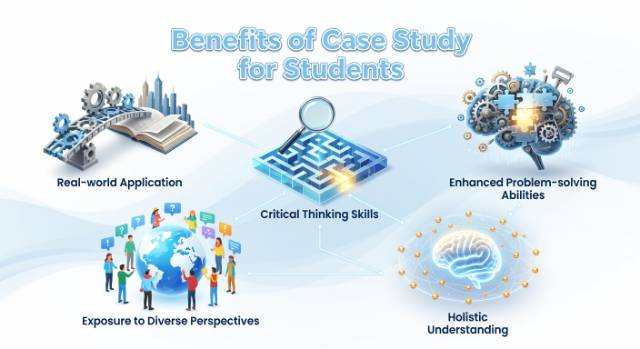
Real-world Application
Case studies serve as a crucial link between theory and practice. By immersing themselves in real-world scenarios, students can apply theoretical knowledge to practical situations.
Critical Thinking Skills
Analyzing case studies demands critical thinking and informed decision-making. Students cultivate the ability to evaluate information, identify key factors, and develop well-reasoned solutions – essential skills in both academic and professional contexts.
Enhanced Problem-solving Abilities
Case studies often present complex problems that require creative and strategic solutions. Engaging with these challenges refines students' problem-solving skills, encouraging them to think innovatively and develop effective approaches.
Holistic Understanding
Going beyond theoretical concepts, case studies provide a holistic view of a subject. Students gain insights into the multifaceted aspects of a situation, helping them connect the dots and understand the broader context.
Exposure to Diverse Perspectives
Case studies often encompass a variety of industries, cultures, and situations. This exposure broadens students' perspectives, fostering a more comprehensive understanding of the world and the challenges faced by different entities.
So there you have it!
We have explored different types of case studies and their examples. Case studies act as the tools to understand and deal with the many challenges and opportunities around us.
Case studies are being used more and more in colleges and universities to help students understand how a hypothetical event can influence a person, group, or organization in real life.
Not everyone can handle the case study writing assignment easily. It is even scary to think that your time and work could be wasted if you don't do the case study paper right.
Still Not Sure Where to Start?
Let our experts handle it from research to final draft
- 24/7 customer support
- On-time delivery guarantee
- 3 hour rush available
- unlimited revisions
You get a Turnitin report proving it's 100% original
Get Started Now






-20616.jpg)
-20617.jpg)