


What is a Rhetorical Analysis Essay?
A rhetorical analysis essay is a type of analytical essay, which focuses on analyzing how effectively the author's strategies achieve their purpose.
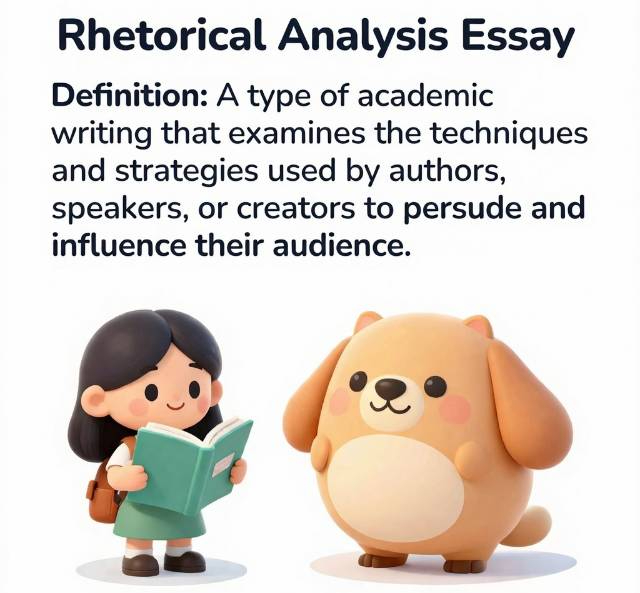
It's a common assignment in high school and college courses, especially in English and communications classes where you use rhetorical devices.
Unlike other types of essays, a rhetorical essay is based on the following information:
- The rhetorical situation is highlighted by the author in the original piece.
- Who is the author?
- The main goal of the analyzed text based on the original author’s intentions
- Does the main idea complete the author’s objectives?
So, a rhetorical analysis essay essentially involves analyzing how a piece of communication uses rhetorical techniques to achieve its persuasive goals.
This type of essay goes beyond summarizing or reviewing; it seeks to uncover the "how" and "why" behind the author's or speaker's persuasive power.
Key Elements of a Rhetorical Analysis Essay
A rhetorical analysis essay examines how an author uses different techniques to persuade or influence their audience. Knowing these key elements will help you create a clear and thorough analysis. Here are the main components to look for:
Rhetorical Situation
The rhetorical situation encompasses the context in which the text was created. It includes the interplay between the author, audience, purpose, and context.
Components:
- Author: Who is the author, and what are their qualifications or background? Understanding the author's perspective helps in assessing their credibility and the effectiveness of their arguments.
- Audience: Who is the intended audience? Consider their demographics, interests, and expectations. This helps in analyzing how well the author tailors their message to connect with this audience.
- Purpose: What is the author's goal? Are they trying to inform, persuade, entertain, or motivate? Identifying the purpose helps in evaluating how the rhetorical strategies align with achieving this goal.
- Context: What are the historical, cultural, or situational factors influencing the text? Context provides insight into why certain rhetorical choices were made.
Rhetorical Appeals
Rhetorical appeals are the strategies used by the author to persuade the audience. They include ethos, pathos, and logos.
Components:
- Ethos (Credibility): How does the author establish credibility? Look for signs of the author’s expertise, authority, or trustworthiness. This can include their background, qualifications, or how they present themselves.
- Pathos (Emotion): How does the author appeal to the audience’s emotions? This can involve the use of emotional language, vivid imagery, or personal stories that evoke feelings. Analyze how these emotional appeals are used to strengthen the argument.
- Logos (Logic): How does the author use logical arguments and evidence? Evaluate the use of facts, statistics, logical reasoning, and examples. This helps in assessing the strength and validity of the arguments presented.
Rhetorical Strategies
Rhetorical strategies are the specific techniques used to achieve the rhetorical goals. These include various methods of persuasion and argumentation.
Components:
- Diction: Analyze the author's choice of words. How do specific word choices contribute to the tone, mood, or persuasiveness of the text?
- Syntax: Examine sentence structure and organization. Consider how the arrangement of words and sentences affects readability and impact.
- Imagery: Look at the use of descriptive language that appeals to the senses. Evaluate how imagery helps create a vivid picture or evoke emotions.
- Figurative Language: Identify the use of metaphors, similes, and other figurative language. Analyze how these elements enhance the author’s argument or appeal to the audience.
Using the SOAPSTone Method for Analysis
The SOAPSTone method is a structured approach that helps you systematically analyze any text. It stands for:
S = Speaker: Who is the voice behind the text? What is their background or perspective?
O = Occasion: What prompted the creation of this text? What is the time and place context?
A = Audience: Who is the intended reader or listener? What are their values and expectations?
P = Purpose: What does the author want to achieve? Inform, persuade, entertain, or call to action?
S = Subject: What is the main topic or issue being discussed?
Tone: What is the author's attitude toward the subject? Formal, casual, urgent, or humorous?
Using SOAPSTone before you start writing helps you identify the rhetorical situation and plan your analysis more effectively. It's especially useful for AP Lang students working under time constraints.
For more details, check out our AP lang rhetorical analysis essay guide.
How to Write a Rhetorical Analysis Essay?
Before you move on to the writing section, it is vital to learn how do you write a rhetorical analysis essay.
When the planning of your essay is strong, the writing process will become easier. Once you’ve identified the key components, start writing your essay by taking the steps provided below:
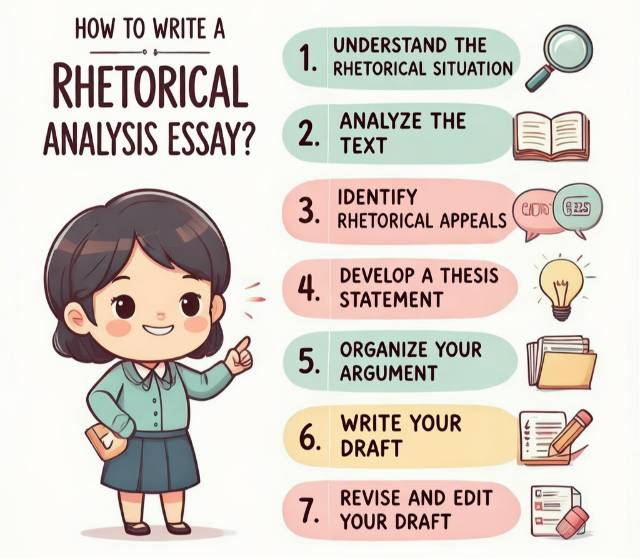
Step 1: Understand the Rhetorical Situation
To analyze a rhetorical text effectively, you need to understand the components of the rhetorical situation as mentioned above.
This involves examining historical and cultural factors that influenced the author’s choices. You should also identify the intended audience to understand their values and expectations, as this shapes the author's approach.
Determine the author’s purpose, whether it’s to persuade, inform, entertain, or motivate, and assess the author’s background to judge their credibility. By considering these factors, you can better understand how the author’s techniques are tailored to achieve their goals.
Short on time?
Let Experts Handle Your Rhetorical Analysis Essay
Meet tight deadlines without sacrificing quality or accuracy in your analysis.
Step 2: Analyze the Text
Divide the text into smaller sections such as paragraphs or segments. This makes it easier to focus on specific parts and understand how each contributes to the overall message.
Look for the central ideas or arguments presented in each section. This will help you see how the author develops their thesis throughout the text.
Step 3: Identify Rhetorical Appeals
To analyze rhetorical strategies, focus on how the author persuades the audience. For ethos, check how the author builds credibility through their expertise, background, or authority. See how this credibility enhances their persuasive power.
In terms of pathos, look at how the author uses emotional appeals, such as charged language, vivid imagery, or personal stories. Assess how these emotional elements strengthen the text’s persuasive impact.
For logos, examine the logical arguments and evidence, including facts, statistics, and reasoning. Evaluate how effectively these elements support the author’s claims and contribute to the overall argument.
Step 4: Develop a Thesis Statement
Your thesis statement should clearly express your main argument about how the author uses rhetorical strategies. It should indicate the effectiveness of these strategies in achieving the author's purpose.
Avoid vague statements. Instead, be specific about which rhetorical strategies you will discuss and how they contribute to the text’s overall effectiveness.
Here’s a rhetorical analysis essay thesis example:
| “In her speech, [Author] effectively uses emotional appeals (pathos) and expert testimony (ethos) to persuade her audience of [specific argument], demonstrating how personal stories and credible sources can enhance the overall impact of a message.” |
Step 5: Organize Your Essay
Organizing your rhetorical analysis essay is crucial for presenting a clear and coherent analysis. Begin by structuring your essay into sections that guide the reader through your argument.
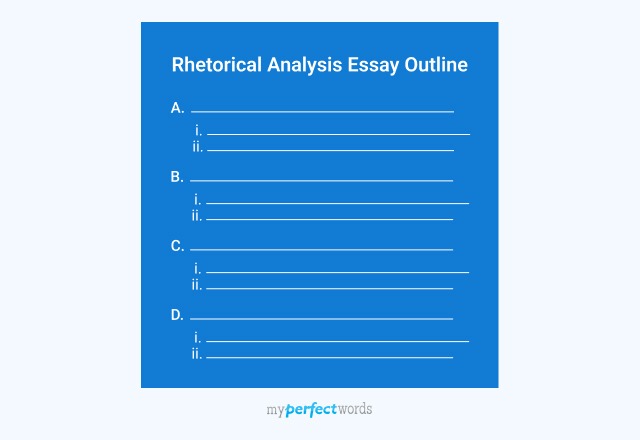
Here is how a typical rhetorical analysis essay outline looks like:
- Introduction
- Body paragraph 1
- Body Paragraph 2
- Body Paragraph 3
- Conclusion
For complete outline information, read our comprehensive rhetorical essay outline blog.
Step 6: Write Your Essay Draft
With your outline in hand, start drafting your essay. Start the essay introduction with a hook, give background on the text and author, and end with a clear thesis statement that presents your main argument.
In the body paragraphs, each should focus on a specific rhetorical strategy.
Start with a topic sentence that introduces the strategy, provide evidence from the text, and then analyze how this evidence supports the author’s purpose. Ensure smooth transitions between paragraphs for a cohesive flow.
Finish with the conclusion by summarizing your key points and restating your thesis in light of the analysis.
Step 7: Revise and Edit Your Draft
After drafting your essay, revise and edit to refine it.
First, check the overall structure to ensure your introduction, body paragraphs, and conclusion are well-organized and cohesive.
Review each paragraph for clear, relevant evidence and effective analysis. Improve clarity and style by simplifying complex sentences and ensuring appropriate tone.
Finally, proofread for grammar, spelling, and punctuation errors.
If you are looking for a topic, do check our rhetorical analysis essay topics, and give a read to our blog!
Writing Tips for Rhetorical Analysis Essay
To ensure your rhetorical analysis essay is effective and engaging, keep these tips in mind as you write:
- Create an Outline: Plan your essay with a detailed outline to stay organized.
- Use Active Voice: Write in active voice for clarity and engagement.
- Avoid Over-quoting: Integrate quotes sparingly and use paraphrasing where possible.
- Ask Critical Questions: Analyze how rhetorical strategies impact the text and audience.
- Balance Detail with Brevity: Be thorough but concise in your analysis.
- Utilize Writing Resources: Use style guides and grammar checkers for support.
- Understand the Text: Read the text multiple times to grasp its main arguments and techniques.
- Support with Evidence: Use relevant quotes and examples to back up your points.
- Stay Objective: Base your analysis on the text, not personal opinions.
Download Your Rhetorical Analysis Worksheet
To make the writing process easier, we've created a comprehensive worksheet that guides you through each step of analyzing a text.
This worksheet includes:
SOAPSTone Analysis Template: Organize your examination of the speaker, occasion, audience, purpose, subject, and tone.
Rhetorical Appeals Identification Checklist: Track ethos, pathos, and logos in the text.
Thesis Statement Formula: Craft a clear and concise central argument.
Paragraph Planning Guide: Structure body paragraphs for maximum impact.
Bottom Line
Writing a rhetorical analysis essay is not easy, but with this descriptive guide, you can craft a well-structured analysis essay.
If you need professional assistance with your academic papers and essays, get analytical essay help from our experts.
Our team is here to help with expert assistance and services at affordable rates!
Professional Rhetorical Analysis Essay Help
Get expert assistance to analyze arguments, tone, and persuasive strategies effectively.
- In-depth rhetorical strategy analysis
- Clear thesis and structured paragraphs
- Accurate use of ethos, pathos, and logos
- 100% original, plagiarism-free work
Submit a well-organized rhetorical analysis essay with confidence.
Get Started Now



-20338.jpg)