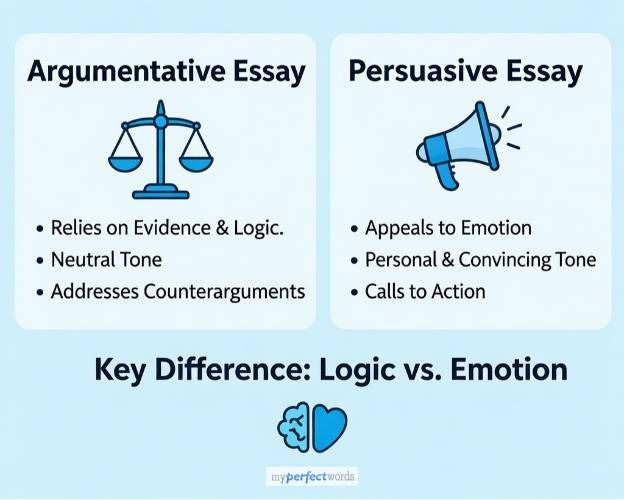
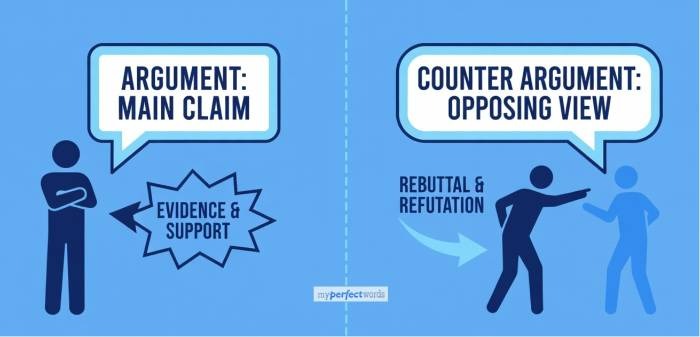
What Makes a Good Argumentative Essay Example?
Before we jump into the examples, let's talk about what you should actually look for when studying them.
A quality argumentative essay example should have:
- Clear thesis statement: You know exactly what position the writer is taking
- Strong evidence: Facts, statistics, expert quotes, research findings
- Logical organization: Each paragraph builds on the previous one
- Addressed counterarguments: The writer acknowledges opposing views and refutes them
- Proper citations: Sources are credited (you'll need this for your own essay)
- Academic but readable tone: Not too casual, but not boring either
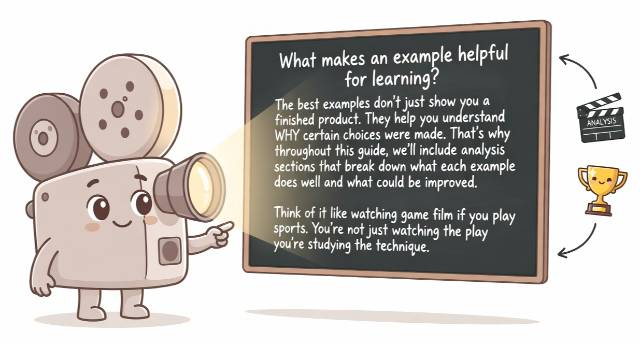
Argumentative Essay Examples by Academic Level
Different academic levels require different approaches. A middle school argumentative essay will look very different from a university-level one. Let's break them down.
Argumentative Essay Examples for Middle School
At this level, the goal is to learn the basic structure and practice making a clear argument. Topics are usually straightforward, and the essays are shorter.
Example 1: The Benefits of Online Learning
Online learning in school is a great idea because it offers many benefits. First, it allows students to learn at their own pace. Some students learn quickly, while others need more time. Online classes let everyone move at a speed that's best for them.
Second, online learning provides access to many resources. Students can watch videos, play educational games, and use interactive tools that make learning fun and engaging. These resources can help students understand difficult topics better.
Third, online learning is flexible. If a student is sick or cannot attend school, they can still learn from home. This means they won't miss important lessons and can keep up with their classmates.
In conclusion, online learning in school is beneficial because it allows students to learn at their own pace, provides access to a variety of resources, and offers flexibility. These advantages can help students succeed in their studies and enjoy learning.
Analysis: What This Example Does Well Clear structure: Each paragraph focuses on one benefit |
How This Example Could Be Improved
- Needs specific examples (mention a particular video platform or tool)
- Should address counterarguments (what about screen time concerns?)
- Could use more concrete evidence (statistics about learning outcomes)
| Key Takeaway for Your Writing: Even simple essays need structure. Notice how each paragraph has a clear topic (pace, resources, flexibility) and sticks to it. |
Example 2: Are Zoos Ethical?
Zoos are places where animals are kept for people to see, but are they ethical? Some people think zoos are bad for animals, but I believe zoos are good for several reasons.
First, zoos help protect endangered animals. Many animals are in danger of disappearing forever, and zoos provide a safe place for them to live and breed. This helps increase their numbers and prevents them from going extinct.
Second, zoos educate people about animals. When people visit zoos, they learn about different species and how to protect them. This knowledge can inspire people to care more about animals and take action to help them in the wild.
Third, zoos provide medical care for animals. Animals in the wild can get sick or injured and may not survive. In zoos, there are veterinarians who can take care of these animals and help them get better.
In conclusion, while some may argue against the ethics of keeping animals in zoos, the benefits of conservation, education, and medical care outweigh the concerns. Zoos play a vital role in preserving endangered species, educating the public, and providing necessary healthcare for animals in need.
Analysis: What This Example Does Well Addresses the opposing view: "Some people think zoos are bad" |
How This Example Could Be Improved
- Needs specific examples (name an endangered species saved by zoos)
- Could elaborate on how education happens (what do visitors actually learn?)
- Missing citations (even at this level, mentioning where information comes from helps)
| Key Takeaway for Your Writing: Even if you don't have formal research, you can acknowledge that "some people disagree" and explain why your position is still stronger. |
Argumentative Essay Examples for High School
High school essays require more depth, better evidence, and more sophisticated reasoning. You'll need to cite sources and address counterarguments more directly.
Example 3: Should College Education Be Free?
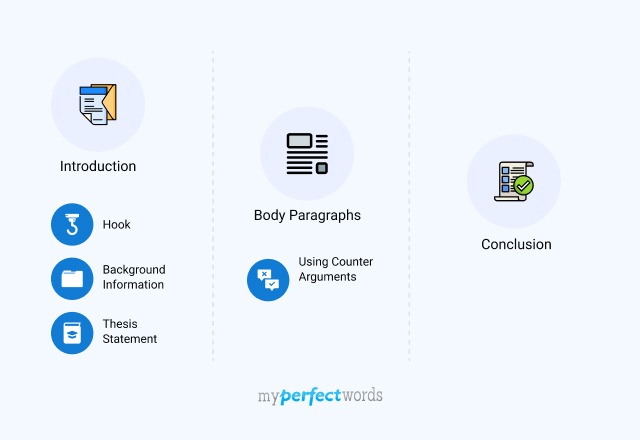
Hook: Imagine a future where every student, regardless of their financial background, has the opportunity to pursue their dreams and contribute to society without the weight of tuition fees holding them back.
Background: In recent years, the cost of college tuition has skyrocketed, leaving many students and families struggling with enormous debt. According to a report by the College Board, average tuition and fees for in-state students at public universities have more than doubled over the past two decades. This financial burden often discourages talented individuals from pursuing higher education and limits social mobility.
Thesis Statement: While implementing free college education may pose challenges, it's essential for creating a more equitable society, reducing economic disparities, and ensuring that education remains a fundamental right rather than a privilege.
Body Paragraph 1 - Access and Equality: Free college education would level the playing field by providing equal opportunities for students from diverse socioeconomic backgrounds. It would empower more individuals to pursue higher education without financial constraints, ultimately leading to a more educated and skilled workforce.
Body Paragraph 2 - Economic Benefits: Investing in higher education pays off in the long run. Graduates tend to earn higher incomes, contribute more to the economy through taxes, and rely less on social welfare programs. This economic boost can offset the initial costs of free college education.
Body Paragraph 3 - Quality of Education: Critics argue that free education might compromise quality due to increased demand and strain on resources. However, proper funding and effective management can ensure that educational standards are maintained, benefiting both students and institutions.
Counterargument: Opponents contend that free college education would strain government budgets and lead to higher taxes. However, studies show that the economic benefits outweigh the costs, and alternative funding sources, such as reallocating existing subsidies or imposing higher taxes on the wealthy, could mitigate financial concerns.
Conclusion: In conclusion, while the debate over free college education is complex, the potential benefits of increased access, reduced economic inequality, and enhanced societal well-being outweigh the challenges. By prioritizing education as a public good, society can create a more equitable future where talent and ambition determine success in higher education and beyond.
Analysis: What This Example Does Well Engaging hook: Starts with a "what if" scenario that draws readers in |
How This Example Could Be Improved
- More specific citations needed (which studies show economic benefits?)
- Could use concrete examples (countries that have implemented free college)
- Body paragraphs could be longer with more supporting details
| Key Takeaway for Your Writing: Notice how the counterargument paragraph doesn't just dismiss the opposing view. It acknowledges the concern is valid ("would strain government budgets") BEFORE explaining why the position still holds. |
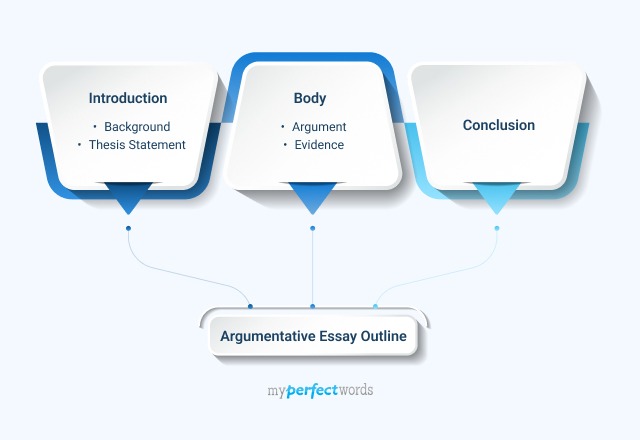
Want more guidance on structuring your essay? Check out our argumentative essay outline guide with fill-in-the-blank templates.
Argumentative Essay Examples for College
College-level essays demand rigorous research, sophisticated analysis, and engagement with academic sources. You're expected to demonstrate critical thinking and nuanced understanding.
Example 4: Should College Admissions Consider Socioeconomic Status?
Introduction: In the ongoing debate over college admissions, the question of whether socioeconomic status (SES) should be a factor has garnered significant attention. While some argue that merit alone should determine admission, others contend that considering SES can promote diversity and equal opportunity. This essay explores both perspectives to determine the merits of incorporating SES into college admissions criteria.
College admissions are a crucial gateway to higher education and future opportunities. The criteria used to evaluate applicants play a pivotal role in shaping student demographics and societal equity.
Background: Currently, college admissions predominantly rely on academic achievements, standardized test scores, and extracurricular activities. However, critics argue that this approach disadvantages students from underprivileged backgrounds who may lack access to resources and opportunities.
Thesis Statement: Including socioeconomic status as a factor in college admissions is essential for promoting socioeconomic diversity, leveling the playing field, and fostering a more inclusive educational environment.
Body Paragraph 1 - Promoting Diversity: SES-based admissions can enrich campus diversity by admitting students with varied life experiences and perspectives. Research from the Century Foundation shows that socioeconomically diverse classrooms enhance learning environments and prepare students for global citizenship. When students from different backgrounds interact, they challenge each other's assumptions and develop more sophisticated thinking.
Body Paragraph 2 - Equal Opportunity: Students from lower SES backgrounds often face systemic barriers that affect their academic performance and access to opportunities. Considering SES acknowledges these challenges and provides a fairer evaluation of their achievements and potential. A student who maintained a 3.5 GPA while working 30 hours a week to support their family demonstrates different skills than a student who maintained a 3.5 GPA with access to tutors and no work obligations.
Body Paragraph 3 - Inclusive Educational Environment: By admitting students from diverse socioeconomic backgrounds, colleges can create a more inclusive environment where all students feel valued and supported. This fosters a sense of belonging and improves overall student outcomes. Studies from the Education Trust demonstrate that when low-income students attend colleges with strong support systems, their graduation rates approach those of their higher-income peers.
Counterargument: Opponents argue that SES-based admissions may compromise academic standards and overlook merit-based achievements. However, holistic evaluations can consider both academic merit and the unique challenges faced by students from lower SES backgrounds. This approach recognizes that merit itself is shaped by opportunity and that true equity requires acknowledging structural barriers.
Conclusion: In conclusion, while the debate over SES-based admissions is complex, incorporating socioeconomic status into college admissions criteria can promote diversity, enhance equal opportunity, and create a more inclusive educational environment. By recognizing the impact of socioeconomic factors on student success, colleges can strive towards a fairer and more equitable admissions process that benefits all students and society as a whole.
Analysis: What This Example Does Well Sophisticated thesis: Takes a clear stance on a nuanced issue |
How This Example Could Be Improved
- Could use more specific data (graduation rate percentages)
- Should include more recent studies (note publication dates)
- Could explore implementation challenges more deeply
| Key Takeaway for Your Writing: Notice how this essay doesn't just say "it's fairer," it explains HOW and WHY through specific mechanisms (diverse perspectives, recognition of barriers, support systems). |
Want to understand different ways to structure your argument? Read our guide on types of argument to learn about Classical, Rogerian, and Toulmin models.
Argumentative Essay Examples for University
University-level essays tackle complex, often controversial topics that require extensive research, theoretical frameworks, and engagement with scholarly debate.
Example 5: Universal Basic Income: A Viable Solution in the Age of Automation?
Introduction: In the contemporary landscape of technological advancement, the concept of Universal Basic Income (UBI) has emerged as a contentious solution to mitigate the socio-economic impacts of automation. As machines and artificial intelligence increasingly replace human labor, concerns about unemployment, income inequality, and societal stability have escalated. This essay explores whether Universal Basic Income is a sustainable remedy to these challenges, examining its potential benefits, drawbacks, and overall feasibility.
Background: Technological advancements, particularly in automation and artificial intelligence, have revolutionized industries across the globe. While these innovations promise efficiency and economic growth, they also raise significant concerns about job displacement and income inequality. The idea of Universal Basic Income, providing every citizen with a regular stipend regardless of their employment statu,s has gained traction as a potential solution to these impending challenges.
Thesis Statement: While Universal Basic Income offers compelling advantages in the face of automation, its sustainability hinges on careful implementation, fiscal feasibility, and its ability to address underlying socioeconomic issues.
Body Section 1 - Benefits of Universal Basic Income:
Addressing Automation-Induced Unemployment: UBI can act as a safety net for workers displaced by automation, providing financial security while they retrain or seek new opportunities. A 2019 pilot program in Stockton, California, demonstrated that recipients used the income primarily for essential needs and experienced reduced income volatility, suggesting UBI can stabilize lives during economic transitions.
Promoting Entrepreneurship and Innovation: With a basic income assured, individuals are more likely to take risks in starting businesses or pursuing creative endeavors, stimulating economic dynamism. Research from the Roosevelt Institute indicates that UBI could grow the economy by $2.5 trillion over eight years by increasing consumer spending and enabling more people to pursue innovative ventures.
Reducing Poverty and Inequality: UBI has the potential to lift many out of poverty and reduce the wealth gap, enhancing social stability and cohesion. Finland's two-year UBI experiment showed improvements in participants' wellbeing and mental health, though employment effects were mixed.
Body Section 2 - Challenges and Criticisms:
Financial Feasibility: Critics argue that funding UBI on a large scale is impractical and may necessitate substantial tax increases or cuts in existing welfare programs. The Roosevelt Institute estimates that a UBI of $1,000 per month for all adults would cost approximately $3 trillion annually, nearly the entire current federal budget. However, proponents argue that this cost could be offset by eliminating redundant welfare programs and implementing wealth taxes.
Work Incentives: Some fear that UBI could disincentivize work, leading to a decline in productivity and innovation. However, data from existing pilots suggest this concern may be overstated. The Stockton pilot found no evidence of reduced work effort, and the Alaska Permanent Fund, which has provided annual dividends since 1982, shows no negative employment effects.
Implementation Issues: The logistics of distributing UBI fairly and effectively to all citizens pose significant challenges, especially in diverse socio-economic contexts. Questions remain about how to handle immigrants, children, and whether the amount should be adjusted for cost of living differences across regions.
Body Section 3 - Feasibility and Sustainability:
Evidence from Pilot Programs: Various pilot programs worldwide have yielded mixed results but offer valuable insights into the potential impact of UBI. Kenya's ongoing GiveDirectly program provides long-term cash transfers to extremely poor households, with early results showing improved food security and asset accumulation. These diverse experiments suggest that context matters significantly in determining UBI's effectiveness.
Adaptability to Automation: As automation progresses, the need for adaptive social policies like UBI becomes increasingly urgent, requiring ongoing evaluation and adjustment. Oxford University researchers estimate that 47% of U.S. jobs are at high risk of automation within the next two decades, lending urgency to policy discussions about social safety nets.
Conclusion: In summary, while Universal Basic Income presents a promising avenue to address the socio-economic upheavals triggered by automation, its viability hinges on navigating substantial challenges. Effective implementation, fiscal prudence, and a nuanced understanding of its societal impacts are crucial. As technology continues to reshape our world, embracing innovative solutions like UBI may prove essential in fostering a more equitable and resilient society. However, UBI should not be viewed as a panacea but rather as one tool among many for addressing the complex challenges of the 21st-century economy.
Analysis: What This Example Does Well Extensive research: Multiple studies cited (Stockton, Finland, Alaska, Kenya, Roosevelt Institute) |
How This Example Could Be Improved
- Could engage more directly with scholarly debate (specific economists who support/oppose)
- Should address philosophical objections (work as source of meaning/purpose)
- Could explore international comparisons more systematically
| Key Takeaway for Your Writing: University-level essays require you to engage with actual research. Notice how this doesn't just say "studies show," it names specific programs, gives specific numbers, and acknowledges limitations in the data. |
Short Argumentative Essay Examples
Not every argumentative essay needs to be 10 pages. Sometimes you need to make your case quickly and effectively.
Example 6: The Impact of the Industrial Revolution on Society (300 words)
Hook: The clattering of textile mills and the rise of steam-powered machinery not only heralded an era of unprecedented production but also reshaped the fabric of human existence forever.
Background: Prior to the Industrial Revolution, most economies were primarily agrarian, with goods produced by hand or simple tools. The advent of mechanization and factory systems in Britain and later worldwide revolutionized production methods, leading to urbanization, mass production, and significant social changes.
Thesis Statement: The Industrial Revolution brought about profound economic growth, social transformation, and cultural shifts, but it also sparked debates over labor conditions, urbanization challenges, and inequality, ultimately shaping the modern world.
Economic Transformation: The Industrial Revolution led to exponential economic growth through increased production efficiency and new technologies. However, it also created disparities between industrialized and agrarian regions, contributing to global economic inequalities that persist to this day.
Social Impact: Urbanization became a hallmark of the Industrial Revolution as people moved from rural areas to cities in search of factory jobs. This mass migration led to overcrowded cities, poor living conditions, and new social hierarchies, challenging traditional social structures.
Cultural Changes: The Industrial Revolution spurred cultural shifts, including changes in art, literature, and social norms. It also fueled intellectual movements like socialism and Marxism, advocating for worker rights and economic equality.
Counterargument: Some argue that the Industrial Revolution primarily benefited the wealthy industrialists while exploiting the labor of the working class, leading to widespread social unrest and economic inequality.
Conclusion: While the Industrial Revolution propelled humanity into an era of unprecedented innovation and economic growth, its legacy is a complex tapestry of progress and challenges. Its profound impact on economies, societies, and cultures continues to shape our modern world, reminding us of the enduring consequences of industrialization and the ongoing pursuit of balance between progress and social equity.
Analysis: What Makes This Short Essay Effective
Concise thesis: States position and main points clearly
Tight paragraphs: Each paragraph is 2-3 sentences but still substantive
Acknowledges complexity: Doesn't oversimplify a complicated historical event
Strong bookends: Compelling hook and thoughtful conclusion
Why Short Essays Are Different: When you're working with a word limit, every sentence has to earn its place. You can't afford lengthy explanations or multiple examples per point. The skill here is choosing the MOST important evidence and stating it clearly. |
Need help creating a counterargument for your essay? Our counter argument in argumentative essay has all the required information.
Deadline Stress Hitting Hard?
Get a professionally researched argumentative essay
24/7 support when you need it
What to Look for When Analyzing Argumentative Examples
When you're studying argumentative essay examples, don't just read them passively. Ask yourself these questions:
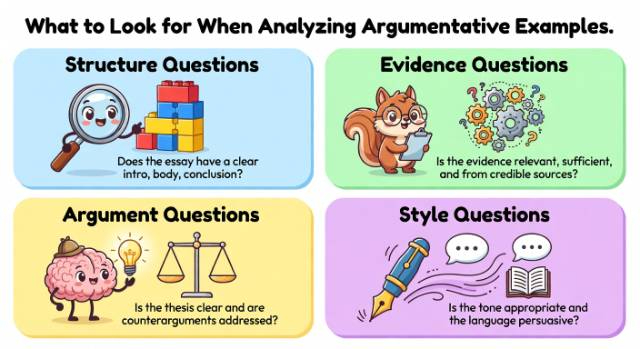
Structure Questions:
- Where is the thesis statement? Is it clear?
- How many body paragraphs are there?
- Does each paragraph have a clear topic sentence?
- How does the writer transition between ideas?
- Where does the counterargument appear?
Evidence Questions:
- What types of evidence does the writer use? (Statistics, expert quotes, examples, research studies)
- Are sources cited properly?
- Is the evidence current and relevant?
- Does the evidence actually support the claim?
Argument Questions:
- Is the thesis arguable, or is it just a fact?
- Does the writer address counterarguments?
- How does the writer refute opposing views?
- Is the reasoning logical?
- Are there any fallacies? (Ad hominem attacks, false dichotomies, slippery slope arguments)
Style Questions:
- Is the tone appropriate for the audience?
- Does the writer use transitions effectively?
- Is the language clear and precise?
- Does the conclusion feel finished, or does it just stop?
| Practice Exercise: Pick one of the examples in this guide and analyze it using these questions. You'll start to see patterns in what makes an argument effective. |
Want to dive deeper into building strong arguments? Check out our types of argument to pick the right type for you essay.
Common Mistakes to Avoid (Based on Argumentative Example Analysis)
After analyzing hundreds of student essays, here are the mistakes that show up again and again:
Mistake #1: Weak Thesis Statements
Bad: "Social media has both good and bad effects."
Good: "Despite its benefits for connection, social media's negative impact on teen mental health outweighs its advantages, warranting stricter age restrictions."
| Why it matters: A weak thesis gives you nothing to argue. It's just obvious. A strong thesis takes a position that someone could disagree with. |
Check out the complete guide on argumentative essay thesis statements so you can write yours perfectly.
Mistake #2: Ignoring Counterarguments
Bad: Only presenting your side
Good: "While critics argue that free college would increase taxes, economic modeling shows that increased tax revenue from higher-earning graduates would offset these costs within 15 years."
| Why it matters: Ignoring the other side makes you look naive. Addressing it makes you look thorough. |
Mistake #3: Evidence Without Explanation
Bad: "A study found that 60% of teens experience anxiety. This proves my point."
Good: "A study found that 60% of teens experience anxiety. This matters because it shows the issue is widespread, not isolated to certain demographics, requiring systemic solutions rather than individual interventions."
| Why it matters: Evidence doesn't speak for itself. You need to connect the dots for your reader. |
Mistake #4: Personal Opinion Instead of Evidence
Bad: "I think animal testing is wrong because it makes me sad."
Good: "Animal testing raises ethical concerns, as 95% of drugs that pass animal trials fail in human trials, suggesting the method is both ethically problematic and scientifically unreliable."
| Why it matters: Your feelings aren't evidence. Facts are evidence. |
Mistake #5: Choosing an Undebatable Topic
Bad: "Pollution is harmful"
Good: "Carbon taxes are the most effective policy tool for reducing industrial pollution"
| Why it matters: If everyone agrees, there's no argument to make. |
To pick the right topic, check out our 270+ argumentative essay topics organized by category.
Mistake #6: Introducing New Information in the Conclusion
Bad: Bringing up a new study or argument in your final paragraph
Good: Synthesizing the arguments you've already made
| Why it matters: The conclusion is for wrapping up, not opening new debates. It should feel like an ending, not a cliffhanger. |
Avoid this issue at any cost. Browse our page to understand how to write an argumentative essay conclusion.
Use Argumentative Essay Examples Effectively
Examples are tools, not templates. Here's how to use them right:
Do This:
Study the structure: Notice how arguments are organized
Analyze the evidence: See what types of sources are used
Learn from mistakes: The "could be improved" sections teach you what to avoid
Adapt, don't copy: Use the techniques, not the exact words
Practice with your own topics: Apply what you learned to your assignment
Don't Do This:
Copy sentences or paragraphs: That's plagiarism
Use the same examples: Find your own evidence
Assume all formats work for all topics: Match structure to content
Skip the analysis: Reading without thinking doesn't help
Rely only on examples: You still need to understand the principles
| The Goal: You should be able to close this guide and write your own essay from scratch using the principles you've learned, not the exact words you've read. |
Downloadable Argumentative Essay Examples PDFs
Below are some more argumentative essay samples for you to review. Take a look for further understanding.
Final Thoughts
You've now seen argumentative essays from every academic level, analyzed what makes them work (and what doesn't), and learned how to apply these lessons to your own writing.
Remember the core principles:
- Clear, debatable thesis that takes a position
- Strong evidence from credible sources
- Logical organization that builds your case
- Acknowledgment and refutation of counterarguments
- Academic tone that's still readable
The best way to improve? Write. Analyze examples, sure, but then sit down and practice. You'll learn more from writing one essay and getting feedback than from reading ten examples.
Start with a topic you actually care about. Research it thoroughly. Build your outline. Then write it section by section. You don't have to get it perfect on the first try that's what revision is for.
You've got the tools. Now go build your argument.
Still Not Sure Where to Start?
Let our experts handle it from research to final draft
- 24/7 customer support
- On-time delivery guarantee
- 3 hour rush available
- unlimited revisions
You get a Turnitin report proving it's 100% original
Get Started Now
-20402.jpg)

-20437.png)